
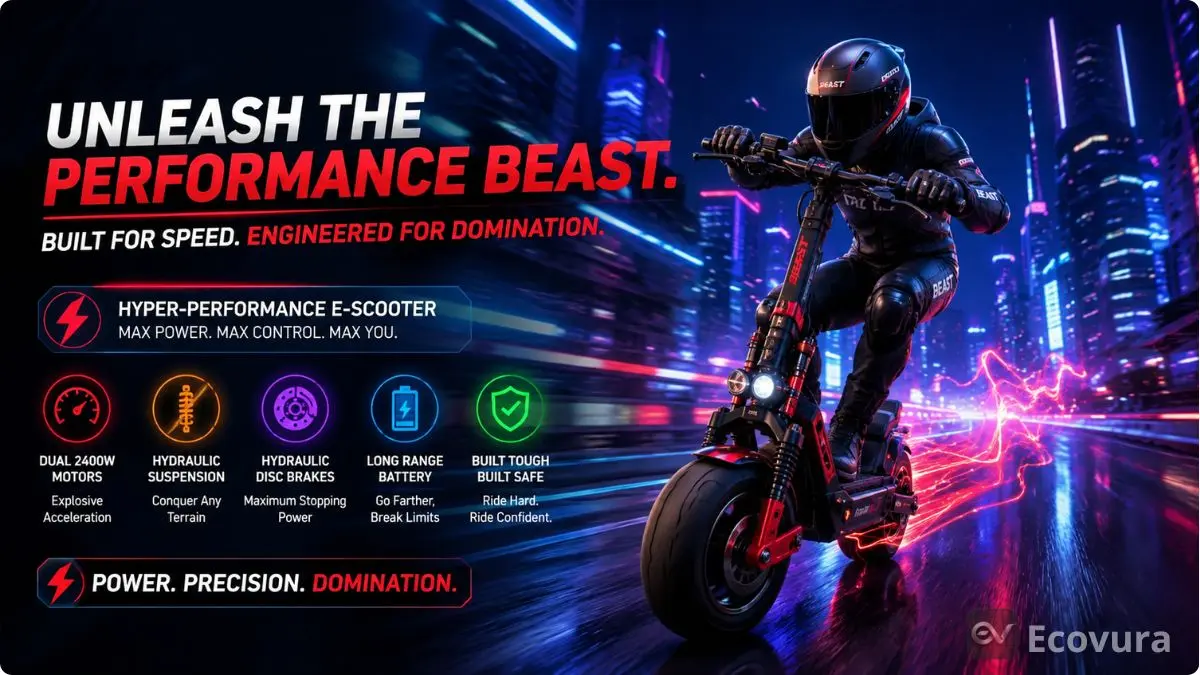
The Electric Scooter Boom: From Urban Transportation to a New Passion-Driven Lifestyle
If you are wondering how to choose an electric scooter that fits your lifestyle, you are not alone. To gain a clearer understanding of today’s personal mobility trends, the Ecovura team spent the first week of June 2026 monitoring and analyzing discussions across Reddit—one of the world’s largest online community platforms. By examining both community size and real-time user activity, we discovered some fascinating differences among four of the most popular transportation segments today.
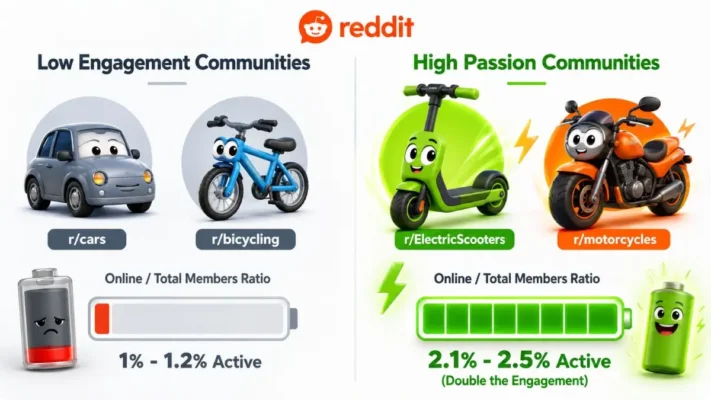
As illustrated above, motorcycle enthusiasts (r/motorcycles) and electric scooter riders (r/ElectricScooters) currently represent some of the most passionate transportation communities online. What stands out most is that although r/ElectricScooters has a significantly smaller subscriber base than traditional categories such as cars or bicycles, its active user ratio consistently outperforms them, reaching approximately 2.1%–2.5%—nearly double that of the other communities.
These numbers are far from accidental.
They reflect a broader shift in how people view electric scooters today. More riders are embracing e-scooters not merely as convenient short-distance transportation tools, but as serious mobility solutions, lifestyle choices, and technology-driven hobbies.
The rapid growth of the community mirrors what is happening in cities across North America and Europe. As urban congestion increases, parking costs continue to rise, and sustainability becomes a growing concern, electric scooters have emerged as one of the most practical and enjoyable forms of personal transportation available.
At the same time, a new generation of riders is discovering something beyond convenience. For many enthusiasts, an electric scooter is not simply a way to get from Point A to Point B—it’s a machine that delivers freedom, excitement, and a unique riding experience.
With hundreds of models available on the market today, choosing the right scooter can quickly become overwhelming. This guide is designed to simplify that process by explaining the major scooter categories and the key factors that truly matter when making a purchase decision.
Understanding Electric Scooters, Their Real-World Applications, and How They Are Classified
What Is an Electric Scooter?
From a mechanical perspective, an electric scooter (or e-scooter) is a compact personal transportation vehicle consisting of a standing deck mounted on two or three wheels, controlled through handlebars, and powered entirely by electricity.
While the design may appear simple at first glance, modern e-scooters are sophisticated machines built around a highly integrated technological ecosystem.
Three core components define the character and performance of every electric scooter:
Battery Pack
Typically powered by lithium-ion cells, the battery pack serves as the scooter’s fuel tank. It determines how far the scooter can travel on a single charge and plays a critical role in overall longevity, reliability, and ownership costs.
Battery quality is often one of the biggest differences between entry-level and premium scooters.
Electric Motor
The motor generates the power required for acceleration, climbing hills, and maintaining speed.
Depending on the model, scooters may use:
- A single motor (front or rear wheel)
- Dual motors (both wheels)
Most modern systems utilize hub motors integrated directly into the wheel assembly. More powerful motor configurations deliver stronger acceleration, improved hill-climbing capability, and enhanced overall performance.
Controller
The controller acts as the scooter’s central nervous system, managing the flow of power from the battery to the motor.
High-end electric scooters often use advanced sine-wave controllers, which provide smoother acceleration, quieter operation, and a more refined riding experience compared to the abrupt power delivery commonly found in lower-cost square-wave controller systems.
Real-World Applications: How Electric Scooters Are Used Across North America and Europe
The perception of electric scooters has evolved dramatically over the past decade.
What was once considered a recreational gadget is now a proven transportation solution serving millions of riders across modern cities.
Today, electric scooters primarily fulfill three key roles.
The Perfect Last-Mile Solution
For commuters who rely on trains, subways, or buses, the distance between a transit station and the final destination often requires an additional 10 to 20 minutes of walking.
A lightweight folding e-scooter effectively eliminates this gap, allowing riders to complete the final leg of their journey quickly and efficiently.
This “last-mile” use case remains one of the strongest drivers behind electric scooter adoption worldwide.
Daily Urban Commuting
With modern scooters capable of traveling 20 to 30 miles—or even more—on a single charge, many urban residents have begun replacing public transportation and even personal vehicles for daily commuting.
The benefits are easy to understand:
- No traffic congestion.
- No expensive parking fees.
- Lower transportation costs.
- Faster travel times in dense city environments.
For many professionals, an electric scooter has become a practical and economical primary transportation option.
Off-Road Adventures and Weekend Recreation
At the opposite end of the spectrum are riders seeking excitement and exploration.
Much like dirt bikes, adventure motorcycles, or mountain bikes, high-performance electric scooters provide a thrilling way to tackle gravel paths, forest trails, steep hills, and coastal terrain.
Modern off-road scooters combine powerful dual-motor systems, long-travel suspension, and rugged tires to create experiences that go far beyond everyday transportation.
For these riders, the scooter is not simply a tool—it is a hobby, a passion, and a gateway to outdoor adventure.
The Buyer’s Classification Guide: Understanding the Market Before Choosing Your Perfect Scooter
Today’s electric scooter market can be categorized in countless ways. Some manufacturers focus on motor power, others emphasize top speed, battery range, weight, or price point.
At Ecovura, however, we believe that all of these specifications are interconnected. In the real world, your intended use case ultimately determines the type of scooter you need, which in turn influences the appropriate motor power, battery capacity, weight, and even the legal regulations that may apply in your region.
To simplify the buying process and help riders make more informed decisions, we classify the e-scooter market into four primary categories based on real-world usage. This approach reflects how most riders actually use their scooters and provides a much clearer framework for choosing the right machine.
Note: Traffic laws and e-scooter regulations vary significantly between countries, states, and municipalities. To keep this guide focused on scooter selection, we will cover legal requirements and regional regulations in dedicated articles.
Category 1: Portable Scooters — The Ultra-Commuter
Core Specifications
- Motor: Single motor, 250W–500W
- Top Speed: 15–20 mph (25–32 km/h)
- Real-World Range: 10–15 miles (15–25 km)
- Weight: 26–35 lbs (12–16 kg)
- Maximum Load Capacity: 200–220 lbs (90–100 kg)
Best For
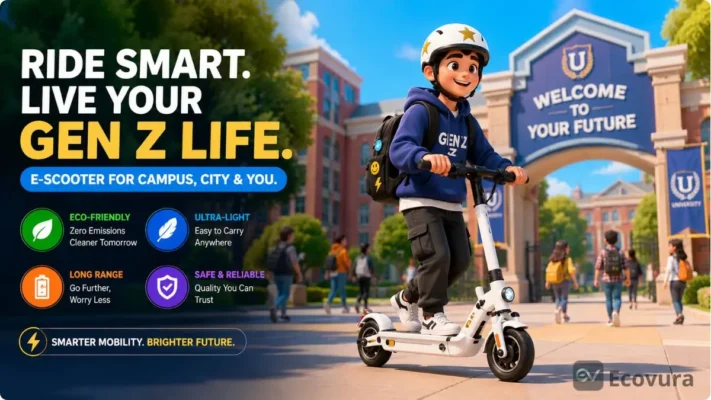
Portable scooters are designed specifically for students, urban commuters, and anyone who values maximum convenience and portability.
These scooters excel at solving the “last-mile” problem. Their lightweight construction allows riders to carry them onto trains, buses, office buildings, elevators, or store them inside small apartments and vehicle trunks with minimal effort.
If portability is your top priority, this category offers the most practical solution.
Representative Brands
- Segway-Ninebot
- Fluidfreeride
- Xiaomi
Category 2: Commuter Scooters — The Daily Commuter
Core Specifications
- Motor: Single motor or light-duty dual motors, 500W–1000W
- Top Speed: 25–31 mph (40–50 km/h)
- Real-World Range: 28–40 miles (45–65 km)
- Weight: 44–62 lbs (20–28 kg)
- Maximum Load Capacity: Up to 265 lbs (120 kg)
Best For
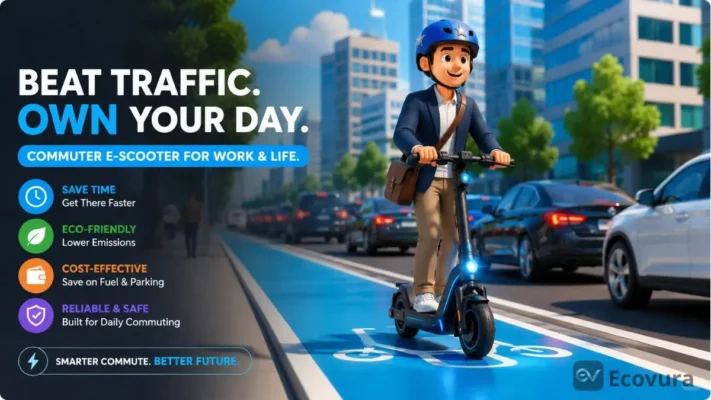
This category is designed for riders who want to replace public transportation or reduce their reliance on personal vehicles for daily commuting.
Commuter scooters provide enough power to tackle parking garages, apartment ramps, moderate hills, and long city routes while maintaining excellent efficiency and reliability.
For most riders, this category represents the ideal balance between portability, comfort, performance, and affordability.
Representative Brands
- Segway-Ninebot
- Apollo Scooters
- NIU
Category 3: Off-Road Scooters (Hybrid) — The Weekend Adventurer
Core Specifications
- Motor: Dual motors, 1000W–3000W
- Top Speed: 34–46 mph (55–75 km/h)
- Real-World Range: 40–56 miles (65–90 km)
- Weight: 70–88 lbs (32–40 kg)
- Maximum Load Capacity: 265–310 lbs (120–140 kg)
Best For
Off-road scooters are built for riders who regularly encounter rough terrain, steep inclines, gravel roads, or poorly maintained streets.
They are equally suited for outdoor enthusiasts who enjoy camping, exploring trails, riding through parks, or venturing beyond paved urban environments on weekends.
Compared to commuter models, off-road scooters feature significantly more powerful motors, larger tires, longer suspension travel, and reinforced chassis designs capable of handling demanding conditions.

Representative Brands
- Kaabo
- VSETT
- YUME Scooter
Category 4: Performance Scooters — The Hardcore Enthusiast
Core Specifications
- Motor: Dual motors only, 3000W–8000W+
- Top Speed: 50–70+ mph (80–110+ km/h)
- Real-World Range: 62–93 miles (100–150 km)
- Weight: 90+ lbs (45+ kg)
- Maximum Load Capacity: Up to 330 lbs (150 kg)
Best For
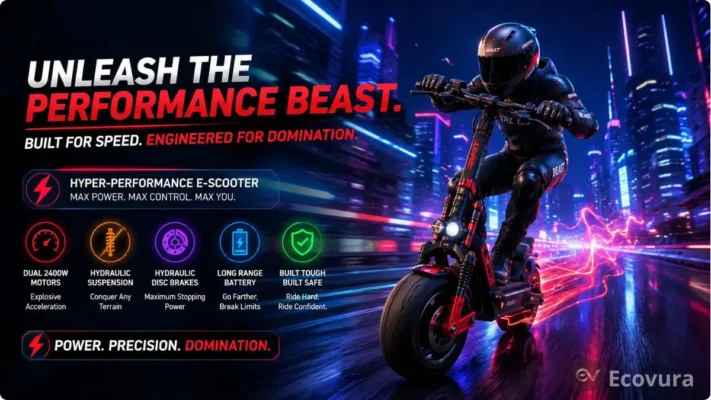
Performance scooters are built for experienced riders and enthusiasts seeking the highest levels of power, acceleration, stability, and range available in the electric scooter industry. These machines are engineered to deliver exhilarating performance while maintaining confidence and control at high speeds. They feature premium suspension systems, advanced braking technology, large-capacity battery packs, and exceptionally robust frames. To truly understand what sets these elite units apart, explore our deep dive into the engineering of a true high-performance electric scooter. For many riders, owning a performance beast is about more than transportation—it’s about experiencing cutting-edge engineering and expressing a passion for high-performance mobility.
Representative Brands
- NAMI Electric
- Dualtron
- InMotion
- YUME Scooter
Quick Comparison Overview
| Feature | Portable Scooters | Commuter Scooters | Off-Road Scooters | Performance Scooters |
| Motor Configuration | Single Motor (250W–500W) | Single or Light Dual Motor (500W–1000W) | Dual Motors (1000W–3000W) | Dual Motors (3000W–8000W+) |
| Top Speed | 15–20 mph | 25–31 mph | 34–46 mph | 50–70+ mph |
| Real-World Range | 10–15 miles | 28–40 miles | 40–56 miles | 62–93 miles |
| Weight | 26–35 lbs | 44–62 lbs | 70–88 lbs | 90+ lbs |
| Max Load Capacity | 200–220 lbs | 265 lbs | 265–310 lbs | Up to 330 lbs |
| Ideal User | Transit Riders | Daily Commuters | Weekend Adventurers | Performance Enthusiasts |
| Representative Brands | Segway-Ninebot, FluidFreeride, Xiaomi… | Segway-Ninebot, Apollo Scooters, NIU… | Kaabo, VSETT, YUME Scooter… | NAMI Electric, Dualtron, InMotion, YUME Scooter… |
Ecovura’s Recommendation: Always Leave Yourself Some Headroom
The four-category framework above is based on typical industry specifications and is intended to provide a practical reference point when comparing electric scooters. In reality, the boundaries between categories are not always fixed, and individual manufacturers often blur the lines through unique engineering approaches.
That said, there is one principle we consistently recommend to every rider.
Once you have identified your primary use case and realistic range requirements, motor power becomes one of the most important technical considerations—and it is usually wise to purchase slightly more power than you think you need.
This does not mean buying a faster scooter simply for speed’s sake.
Instead, additional power provides meaningful real-world benefits:
- Reduced stress on the motor during daily operation.
- Lower operating temperatures for electronic components.
- Less strain on the battery and controller.
- Improved long-term reliability.
- Smoother hill-climbing performance.
- Additional acceleration when needed in unpredictable traffic situations.
In other words, a scooter that operates comfortably below its maximum capability will generally feel more refined, more durable, and more enjoyable to ride over the long term.
Think of it as investing in performance reserves rather than chasing higher speeds. In most cases, a little extra power today translates into a better ownership experience tomorrow.
The Key Factors That Separate Great Scooters from Average Ones
Choosing the right scooter category is only the first step.
Once you’ve identified the type of scooter that fits your lifestyle, the next challenge is determining which specific model delivers the best value, reliability, and long-term ownership experience.
Two scooters may appear similar on paper, yet provide dramatically different levels of safety, durability, comfort, and overall satisfaction. That’s why experienced riders look beyond top speed and range and pay close attention to the factors that truly define quality.
Smart Technology Integration
Modern electric scooters have evolved far beyond simple transportation devices.
Today’s premium models increasingly incorporate advanced technology designed to improve convenience, security, and customization.
Features worth considering include:
- NFC key cards and smart locking systems
- Fingerprint authentication
- Smartphone app integration
- Bluetooth and cellular connectivity
- GPS tracking and anti-theft protection
- Customizable riding modes
- Adjustable acceleration profiles
- Firmware updates and performance tuning
These technologies not only enhance the ownership experience but can also add meaningful security and functionality to everyday riding.
Battery Quality and Power System Longevity
The battery is typically the most expensive component on any electric scooter.
As a result, battery quality should be one of the highest priorities when evaluating a potential purchase.
Premium scooters often use battery cells from well-established manufacturers such as Samsung or LG. These cells generally offer:
- Better energy efficiency
- More consistent power delivery
- Slower capacity degradation over time
- Improved thermal management
- Higher safety standards
A high-quality battery pack not only extends range but also helps maintain performance throughout the scooter’s lifespan.
Braking System
Performance means very little if a scooter cannot stop safely.
The braking system is one of the most critical safety features on any scooter, especially as speeds increase.
Depending on the category, braking systems may include:
- Drum brakes
- Mechanical disc brakes
- Hydraulic disc brakes
- Electronic braking systems (E-Brakes)
- Electronic Anti-Lock Braking Systems (E-ABS)
For higher-performance scooters, hydraulic brakes combined with electronic braking assistance typically provide the most confidence-inspiring stopping power.
When evaluating a scooter, always consider braking performance with the same importance as acceleration and speed.
Suspension and Tire Setup
A scooter’s suspension and tire combination has a direct impact on comfort, control, and rider fatigue.
These components determine whether a ride feels smooth and planted or harsh and unstable.
Important factors include:
Tire Type
- Solid tires
- Pneumatic (air-filled) tires
- Tubeless tires
- Hybrid tire designs
Suspension Design
- Spring suspension
- Rubber suspension systems
- Hydraulic suspension
- Long-travel off-road suspension
A well-designed suspension system can dramatically improve ride quality, reduce vibration, and provide better control over rough surfaces, potholes, and uneven terrain.
For riders covering long distances or riding frequently, suspension quality often becomes one of the most appreciated features of a scooter.
Build Quality and Mechanical Engineering
The true quality of a scooter often reveals itself after months—not days—of ownership.
This is where build quality matters.
When evaluating a scooter, pay attention to questions such as:
- Is the frame constructed from aerospace-grade aluminum or reinforced steel?
- How robust is the folding mechanism?
- Does the steering stem remain solid over time?
- Is there any tendency for stem wobble to develop?
- Are cables routed cleanly and protected from the elements?
- How refined is the overall fit and finish?
Well-engineered scooters generally feel tighter, quieter, and more confidence-inspiring throughout years of use.
Ecovura’s Recommendation
This guide is designed to help you identify the scooter category that best matches your needs.
However, selecting the right category is only the beginning of the buying journey.
Every manufacturer approaches design, engineering, suspension tuning, braking performance, battery management, and feature integration differently. As a result, two scooters within the same category can deliver very different ownership experiences.
That’s why we strongly recommend reading detailed model-specific reviews before making a final purchase decision.
At Ecovura, we regularly publish in-depth reviews covering leading brands such as Segway-Ninebot, Apollo, NAMI Electric, Dualtron, YUME Scooter, and Kaabo, helping riders understand not only the specifications but also the real-world strengths and weaknesses of each model.
Before investing your hard-earned money, take the time to explore those detailed reviews. A little research today can save a great deal of regret tomorrow.
Conclusion: Ride Smart, Ride Safe, and Enjoy the Journey
Whether you’re drawn to the lightweight convenience of a Portable Scooter for everyday commuting or you’re ready to unleash the raw performance of a high-powered machine built for thrill-seeking adventures, there is an electric scooter perfectly suited to your lifestyle.
One thing remains true across every category: great riding experiences come from a combination of freedom, responsibility, and respect for the road.
Much like the passionate riders found throughout communities such as r/ElectricScooters, experienced scooter enthusiasts understand that performance and responsibility go hand in hand.
Before every ride, make sure you:
- Wear a quality helmet.
- Consider a full-face helmet for high-performance scooters.
- Check your brakes regularly.
- Inspect tire pressure and overall scooter condition.
- Follow local regulations.
- Respect pedestrians and fellow road users.
True freedom is at its best when it is enjoyed safely—not only for yourself but for everyone around you.
The electric scooter revolution is already underway.
The only question now is:
Which scooter will become your perfect riding companion?
Ready to Find Your Next Scooter?
👉 Explore the latest electric scooter models in the Ecovura Product catalog and discover options tailored to your riding style, budget, and performance needs.
👉 Looking for the best value? Visit our Deals & Promotions section to find exclusive discounts and special offers on some of the most popular scooters available today.
Your next adventure starts with the right ride.
Frequently Asked Questions
For beginners, prioritize safety, ease of control, and a manageable weight over raw speed. Look for an e-scooter with a top speed capped at 15–20 mph, reliable dual braking systems (mechanical and electronic), and a lightweight frame (under 35 lbs) for easy carrying. Brands like Segway-Ninebot offer excellent entry-level models with smooth acceleration curves that won’t overwhelm a first-time rider.
When choosing an adult e-scooter, you should first define your primary riding purpose, which directly dictates the motor power and specs you need. For lightweight urban cruising or flat-surface commuting, a standard 350W motor is perfectly sufficient. If your daily route involves tackling steep urban inclines, a 500W motor will provide the necessary torque. Crucially, if you belong to the thrill-seeking enthusiast community—the real pro-riders looking for extreme speed and off-road thrills—you should skip the basic models entirely and invest in a high-end Performance Beast (Group 4). These heavy-duty models are equipped with high-performance dual motors (at least 1500W each), delivering a massive total output of 3000W+ alongside hydraulic suspension and advanced braking systems. Additionally, always ensure the scooter's maximum load capacity safely exceeds your weight and the battery covers your daily mileage plus a 20% safety headroom.
A sit-down electric scooter offers superior comfort for long-distance commutes, elderly riders, or individuals with back and knee issues. However, stand-up scooters remain the gold standard for daily multi-modal commuting due to their superior portability, tighter turning radius, and ease of folding when boarding public transit or storing under an office desk.
While there are basic online finder tools, you can easily find your perfect match by answering three core questions: What is your daily mileage? (Determines range specs), Do you have to tackle steep hills? (Determines motor power), and Do you need to carry it upstairs? (Determines weight limit). Reviewing Reddit communities like r/ElectricScooters is also highly recommended for unbiased, real-world owner feedback.